The Mine That Would Change US Public Lands
How Congress Could Quietly Dismantle Public Lands Protections Starting With the Boundary Waters
If you've been following this series, you already know that public lands decisions are rarely simple — they involve competing mandates, multiple agencies, and stakeholders with vastly different relationships to the land. The fight over the Boundary Waters Canoe Area Wilderness in northern Minnesota is one of the most consequential public lands battles playing out right now, and it's happening fast. The U.S. Senate is expected to vote on a resolution that would overturn a 20-year mining ban protecting one of the most visited wilderness areas in the country — using the same Congressional Review Act tool we covered in our BLM basics post. Here's what you need to know.
If the CRA undoes a 20-year moratorium on mining leases in one of the country’s most protected wilderness areas, what does that mean for every other protected landscape in the U.S.?
What is the Boundary Waters
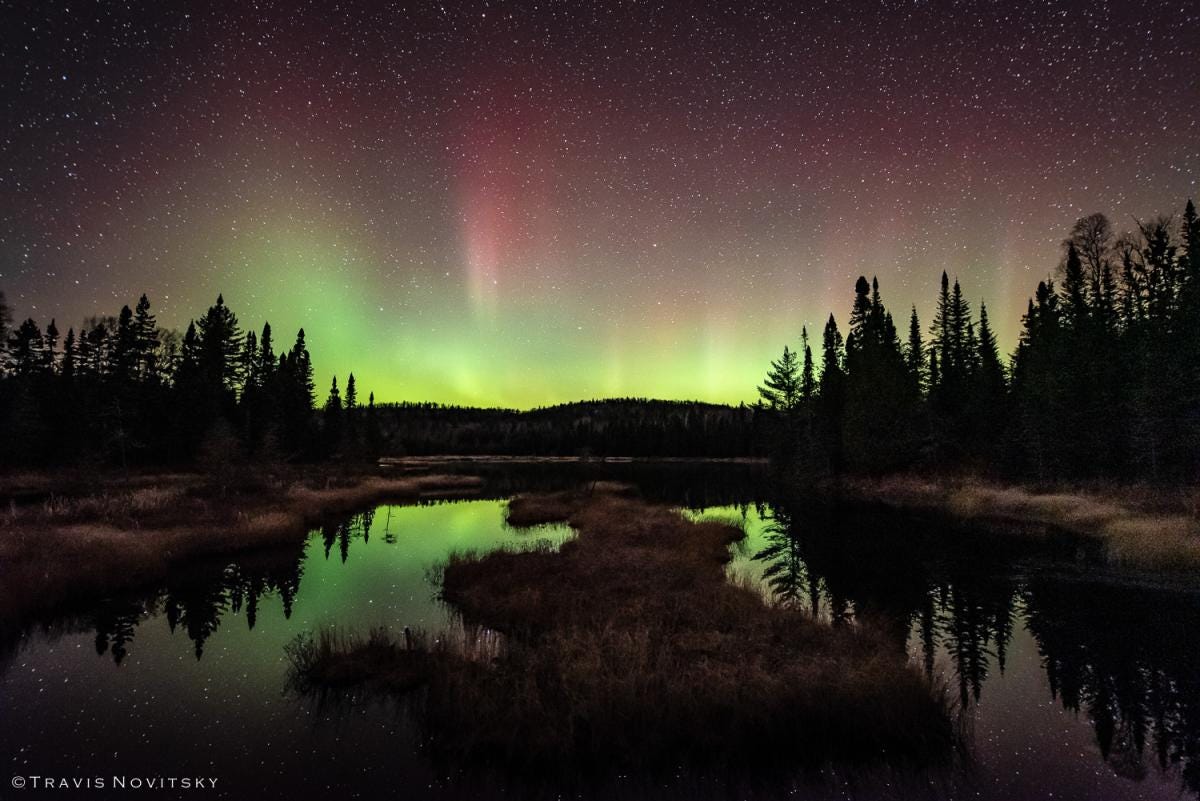
The Boundary Waters Canoe Area Wilderness in northern Minnesota represents one of the most visited and ecologically significant wilderness areas in the U.S., drawing over 150,000 visitors annually— making the proposed Twin Metals mine so contentious. The case presents as a multiple-use conflict, defined by federal public lands management since the passage of the Multiple Use Sustained Yield Act of 1960 and Federal Land Policy and Management Act of 1976. Together with the Superior National Forest, the region contains 20% of all freshwater in the entire National Forest System, and the Boundary Waters is home to over 1,100 lakes, 1,200 miles of canoe routes, and a regional economy generating $78 million in annual output and supporting 1,100 jobs. It is part of the boreal forest biome, home to endangered species including the gray wolf and Canada lynx, and serves as a dark sky sanctuary. Beyond recreation, the proposed mine sits within Tribal Ceded Territories where the Ojibwe retain usufructuary rights — the right to hunt, fish, and gather — under the Treaty of 1854.
What is Twin Metals proposing


Twin Metals Minnesota, a subsidiary of Antofagasta, a Chilean mining conglomerate, is proposing to extract copper, nickel, and platinum—minerals considered critical to the energy transition and national security. The Duluth Complex in northeastern Minnesota contains these critical minerals which are highly sought after—95% of the country's known nickel resources, 88% of cobalt, 75% of platinum group metals, and a third of copper. Twin Metals is proposing to use dry stacking instead of traditional wet tailings ponds, which reduces the risk of dam failures, and claims that because of the geology and project design, they have eliminated the risk for acid rock drainage. The mine would be an underground mine rather than open pit.


The mine would be located near Birch Lake and the South Kawishiwi River in the Rainy River watershed—and the primary concern is the way that water flows in that watershed and where the project would be placed relative to it (Save the Boundary Waters, 2026). The Laurentian Divide runs through northern Minnesota and serves as a geographic boundary between surface watersheds (Pearson et al., 2022). Surface water north of the Laurentian flows to Hudson Bay, and the water south of it eventually flows to either the Gulf of Mexico or the Atlantic Ocean. Sulfide ores contain sulfur-bearing minerals that produce sulfuric acid when exposed to air and water (Willms, 2026). Mining operations would cause acid mine drainage that would flow directly into the BWCAW and the border waters between the U.S. and Canada. Defined by interconnected lakes, the Boundary Waters is vulnerable to water pollution — pollutants do not remain isolated, they move, ensuring contamination in one place will affect water miles away (Willms, 2026).
A decade of political whiplash
The Boundary Waters has been contested for decades, but the conflict over Twin Metals has been subject to political whiplash over the last decade. The conflict began in 1966 when the BLM issued two federal preference right mineral leases to the International Nickel Company, covering roughly 5,000 acres of the Superior National Forest adjacent to the BWCAW. The 1978 Boundary Waters Wilderness Act banned mining within the BWCAW and established a 220,000-acre Mining Protection Zone along entry corridors. The leases were renewed in 1989 and 2004, but in 2016 the Obama administration denied a third renewal citing unacceptable environmental risk to the watershed. The first Trump administration reversed course, renewing the leases in 2019. The Biden administration then canceled the leases in 2022 and issued a 20-year mineral withdrawal protecting 225,504 acres in 2023. Most recently, the current Trump administration submitted that withdrawal to Congress under the CRA, and the House passed H.J. Res. 140 on January 21, 2026 by a 214-208 vote with a Senate vote imminent.
The competing arguments
Competing commodity and non-commodity values on public lands are at the center of the Twin Metals conflict—a tension rooted in the multiple-use framework established by MUSYA and FLPMA. Proponents argue the mine would provide economic stability to the Ely region, which has never fully benefited from the area's tourism economy, and would contribute to domestic critical mineral independence, particularly at a time of geopolitical competition (PBS, 2019). The Duluth Complex contains 95% of the country's known nickel resources, 88% of cobalt, and 75% of platinum group metals—reserves carrying significant national security implications. However, the resource independence argument is complicated by the fact that the U.S. lacks the resources required for domestic smelting of nickel and cobalt. This means that extracted minerals would likely need to be exported for processing and bought back, undermining the self-sufficiency rationale—a concern reinforced by the fact that Antofagasta, Twin Metals' parent company, has existing agreements to process copper at Chinese smelters (Donnelly & Chakrabarti, 2026). A 2020 Harvard economics study found that in 89% of projected scenarios, a recreation-based economy would generate more jobs and income than a mining-based one, further complicating the local economy argument (Stock & Bradt, 2020).
The other side of the debate represents a broad coalition of environmental groups, recreation businesses, and Indigenous nations. The Ojibwe's treaty rights to hunt, fish, and gather would be directly threatened by sulfide-ore mining contamination of their food and water sources. Two former superintendents of Voyageurs National Park, which lies downstream, stated this week that contamination from the mine would inevitably reach the park's waters, ecosystems, and fisheries—and that once these waters are polluted, they cannot be fully restored. Ultimately, this is a conflict between special interests seeking commodity extraction and the common interest in protecting an irreplaceable public resource for future generations.
What’s happening right now
The current administration has used an aggressive set of tools to advance mining development near the Boundary Waters. At the executive level, several orders have prioritized domestic mineral production—including Unleashing American Energy and Immediate Measures to Increase American Mineral Production—which direct federal agencies to streamline permitting and reduce regulatory barriers for critical mineral projects. At the agency level, the Interior Department reinstated Twin Metals’ lease renewal in August 2025, and the administration submitted the Biden-era mineral withdrawal to Congress to initiate the CRA review process—allowing them to bypass the NEPA review process that would otherwise apply. Legislative tools including the Critical Mineral Dominance Act (H.R. 4090) and the FY 2026 Interior-Environment Appropriations Bill reflect Congressional support for increased domestic mineral development.
As of April 15, time has been held on the Senate floor for the vote—meaning it could happen at any moment. The resolution requires only a simple majority to pass and cannot be filibustered. The window for the Senate to act under the CRA closes at the end of April.
This is no longer just a fight about one mine in Minnesota. It is a test of whether established public lands protections can be quietly dismantled by Congress.
What needs to happen and why it matters beyond Minnesota
Litigation is the most immediate lever opponents can use. Environmental groups can challenge lease reinstatements and CRA proceedings under the Clean Water Act and the Wilderness Act, and tribal nations can invoke treaty consultation requirements to slow or complicate the permitting process. At the state level, the Minnesota DNR retains authority to deny Twin Metals’ state permit to mine, and the state legislature could pass permanent protection legislation for the Boundary Waters.
If H.J. Res. 140 passes the Senate and is signed by Trump, it would bar any future administration from issuing a substantially similar mineral withdrawal without new Congressional authorization—taking away not just the protection, but the ability of any future administration to put similar ones in place. Ely residents who support the project, including younger community members, are driven by genuine economic anxiety—and they are being presented with a solution. That local context matters. But the fact that the CRA has never been used to overturn a mineral withdrawal, and that its success here would permanently prevent future administrations from issuing similar protections without Congressional approval, makes clear that this is no longer just a fight about one mine in Minnesota. It is a test of whether established public lands protections can be quietly dismantled by Congress, setting a dangerous precedent for every landscape across the country.
What you can do
Contact your U.S. Senators today and urge them to vote no on H.J. Res. 140. You can reach the Senate switchboard at (202) 224-3121. Even if you don't live in Minnesota, this vote affects public lands protections across the entire country. Find more ways to take action at Save the Boundary Waters.


